
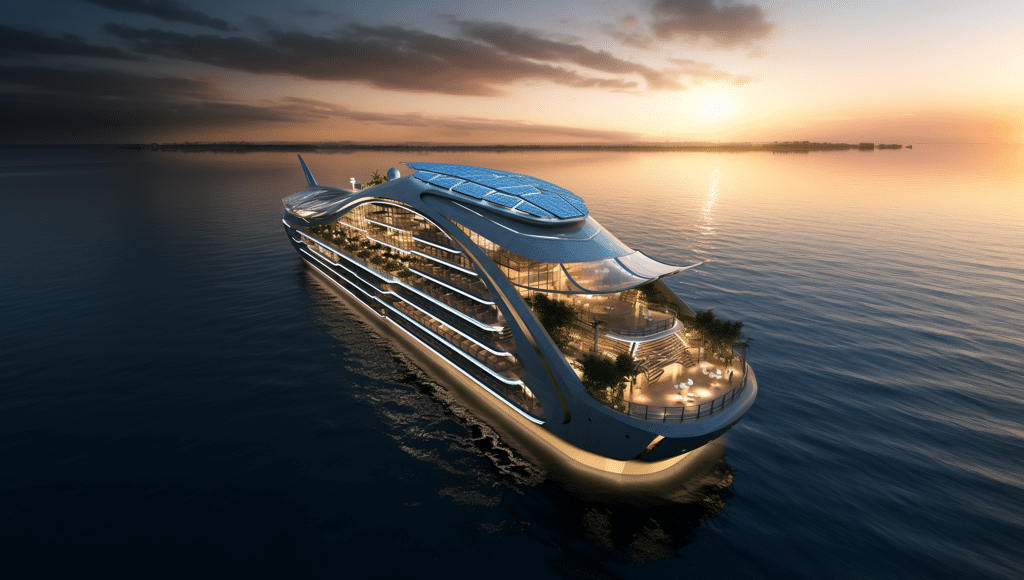
Luxury cruises get sold on a fairly narrow set of images: a marble-floored atrium, a butler for your suite, a wine list as thick as a paperback. All of that exists and, for a certain kind of traveller, all of it genuinely matters. But it’s also only one version of what luxury cruising actually is, and a different definition of luxury cruises is worth understanding before assuming the biggest, glossiest brochure automatically represents the best option.
The more useful way to think about a luxury cruise Australia traveller might book isn’t ship size or thread count — it’s space, ratio and access. Once those three factors are on the table, the definition of luxury opens up considerably, and some of the more interesting options aren’t the ones with the biggest atrium at all.
Space and Ratio: The Numbers That Actually Drive the Experience
Two figures matter more than almost anything else when assessing genuine luxury at sea: guest numbers and staff-to-guest ratio.
A ship carrying a few thousand guests, however beautifully finished, is still a ship carrying a few thousand guests. Dining reservations need booking in advance, popular excursions sell out, and common areas — however grand — are shared with a genuinely large number of other travellers at any given time. None of that is a criticism; it’s simply arithmetic, and it applies regardless of how much marble is in the lobby.
Contrast that with a vessel carrying a few dozen guests. Suddenly the numbers work completely differently:
- Crew know guests by name within a day or two, rather than managing them as a rotating population
- No queuing for anything — meals, activities, disembarkation for shore excursions
- Common spaces feel genuinely spacious relative to guest numbers, regardless of the ship’s actual size
- Itineraries can flex around weather, wildlife or guest preference in a way that’s practically impossible to coordinate across a few thousand people
This is really the crux of it. A smaller, well-appointed vessel with a strong crew ratio often delivers a more genuinely luxurious experience than a much larger ship with a more impressive brochure, simply because luxury is fundamentally about attention and space rather than square footage of marble.
Access as a Form of Luxury
Here’s the argument that rarely makes it into conventional luxury cruise marketing: the ability to go somewhere nobody else can reach is itself a luxury, arguably a more meaningful one than a better cocktail list.
A large luxury liner, regardless of how well it’s fitted out, is still restricted to genuine ports with adequate depth and infrastructure. A smaller luxury vessel with a shallow draft can anchor in places those larger ships never see at all — quiet bays, tidal river systems, remote reef formations that only reveal themselves at certain points in the tide cycle. The best luxury cruise australia options are increasingly built around exactly this kind of coastal access rather than ship scale, and they tend to deliver experiences that no amount of on-board polish can replicate, because the polish doesn’t help if the ship can’t physically get to the interesting part of the coastline in the first place.
This matters especially in Australia, where some of the country’s most striking natural features — waterfalls that fall directly into the ocean, reef systems only visible at low tide, gorges cut into remote coastal ranges — sit along stretches of coast with no road access and no port infrastructure whatsoever. A large ship simply cannot reach them, no matter the budget behind it.
What Genuinely High-End Small-Ship Cruising Looks Like in Practice
Once space and access are established as the real drivers of luxury, the picture of a high-end small-ship holiday starts to look quite different from the conventional image.
Cabins tend to be generously proportioned relative to guest numbers rather than maximised for density. Meals are typically prepared for a known, relatively small group rather than mass-catered, which usually means fresher produce and more flexibility around dietary needs. Activities — kayaking, snorkelling, guided walks, sometimes a helicopter for aerial access to places a boat alone can’t reach — are often built into the fare rather than upsold, because they’re genuinely part of what the experience is selling rather than an optional extra.
Crucially, the crew-to-guest ratio on a well-run small luxury expedition vessel is often considerably higher than on a large ship, which translates directly into the kind of personalised service that luxury travel is meant to be about in the first place.
Service Culture: The Part That’s Hardest to Photograph
Marketing material can capture a suite, a dining room, even a sunset over the water. What it can’t really capture is service culture, and that turns out to be one of the biggest genuine differentiators between luxury cruise operators once you’re actually aboard.
On a large luxury ship, service is necessarily somewhat systematised — a big team, clear rosters, polished but inevitably a little standardised given the sheer number of guests any one crew member interacts with across a voyage. That’s not a criticism; it’s simply what running a large operation well looks like, and the best big-ship operators do it extremely well within those constraints.
On a small luxury vessel, service tends to work differently because it can. With a handful of crew serving a few dozen guests rather than a few thousand, staff get to know individual preferences quickly — dietary needs, favourite spots on deck, which excursions someone’s particularly keen on — and adjust accordingly without needing a system to manage it. Meals can be genuinely tailored rather than selected from a standard menu rotation. A crew member who notices a guest missed the best whale sighting of the trip can often arrange another opportunity, because the itinerary has the flexibility to allow it.
Neither approach is inherently superior — a guest who wants the reassurance of a large, highly organised operation may find the smaller model’s informality less appealing. But for travellers who define luxury partly through genuine personal attention, the smaller vessel’s approach to service is difficult to replicate at scale, and worth experiencing directly rather than assessing from a brochure photo.
Questions Worth Asking Before Booking Any Luxury Cruises
A handful of practical questions cut through the marketing quickly:
- How many guests does the ship actually carry, and what’s the crew-to-guest ratio?
- Are activities and excursions included in the fare, or charged separately once aboard?
- Does the itinerary reach genuinely remote locations, or mostly conventional ports with a higher standard of on-board finish?
- What’s the cabin size relative to guest numbers, rather than just the headline suite category?
- How flexible is the itinerary around weather, tides or wildlife timing?
The answers tend to separate genuine luxury — built around space, service and access — from a conventional cruise simply marketed at a higher price point.
How Pricing Reflects the Difference
It’s worth addressing cost directly, because the way luxury cruises are priced actually tells you a lot about which definition of luxury you’re paying for.
A large luxury liner prices its premium into the finish and inclusions available across a genuinely large guest count — better cabins, more dining choice, higher-end fittings, all spread across several thousand fares, which keeps the per-guest cost of that polish comparatively contained. A smaller luxury expedition vessel prices its premium differently: with only a few dozen guests aboard, the fixed cost of running the ship, employing a high crew ratio and provisioning for genuinely remote itineraries falls across a much smaller number of fares, which is the real reason nightly rates in this category tend to run higher.
That’s not a reason to dismiss the smaller category as poor value — quite the opposite, once the comparison is done properly. Because activities, meals and transfers are typically included rather than charged as extras, and because the itinerary reaches places a larger ship simply cannot go, the effective value of a higher nightly rate often looks quite different once genuine like-for-like inclusions are compared rather than just the number on the brochure.
The sensible approach is the same regardless of category: work out the total cost of the actual holiday, inclusions and all, rather than comparing nightly rates as if every luxury cruise were selling the same thing.
When to Book, Given How Few Cabins Are Actually Available
There’s a practical planning point that catches out a lot of travellers new to the smaller end of the luxury market: booking timelines here work quite differently from a large ship.
A big luxury liner might carry well over a thousand cabins across multiple categories, so even a popular sailing usually has some availability closer to departure. A small luxury expedition vessel might carry a few dozen cabins in total, across a limited number of departures each season tied to favourable weather and tide conditions. Do the arithmetic and it’s obvious why the best departures — particularly anything covering the Kimberley’s dry-season window — can sell out six to twelve months in advance, sometimes considerably longer for a specific suite category.
The practical takeaway is straightforward: if genuine access and space are what you’re after rather than a big-ship departure, start looking well ahead of when you’d normally plan a holiday. Waiting until a few months out, which works perfectly well for mainstream cruising, often means the smaller luxury operators worth considering are already fully booked for the season.
The Honest Comparison
None of this is to say a large luxury liner is the wrong choice — for travellers who want extensive on-board facilities, a wide range of dining options and the reassurance of a familiar, established format, that category delivers exactly what it promises. But it’s worth being clear-eyed about what that format can and can’t offer.
A large ship buys polish, choice and scale. A smaller luxury expedition vessel buys space relative to guest numbers, a level of personal attention that’s difficult to replicate at volume, and access to parts of the coastline that no amount of on-board finish can substitute for. For Australian travellers specifically — given how much of this country’s most remarkable coastal scenery sits beyond the reach of any port — that second definition of luxury is worth taking seriously before assuming the biggest ship is automatically the best one.
Choosing the Right Kind of Luxury for You
The most useful question to ask before booking any luxury cruise isn’t which operator has the most impressive brochure — it’s what luxury actually means to you personally. If it’s abundant choice and familiar grandeur, the big-ship category still delivers that better than anything else on the water. If it’s space, genuine attention, and reaching places most other travellers never will, the smaller, access-driven end of the luxury market is worth investigating properly before the decision is made.
Either way, understanding the difference before booking — rather than assuming all luxury cruising looks the same — makes for a considerably better holiday than the brochure alone can promise.
